

HD Schrader geometric Acrylic Relief panel 1972
€ 3500
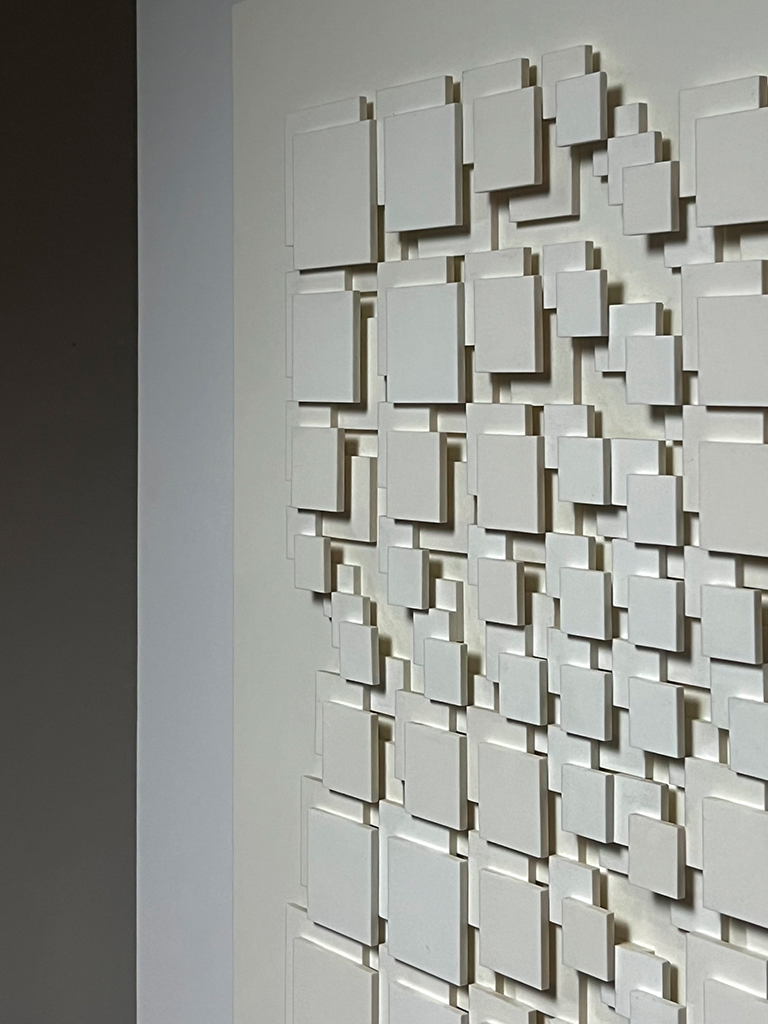
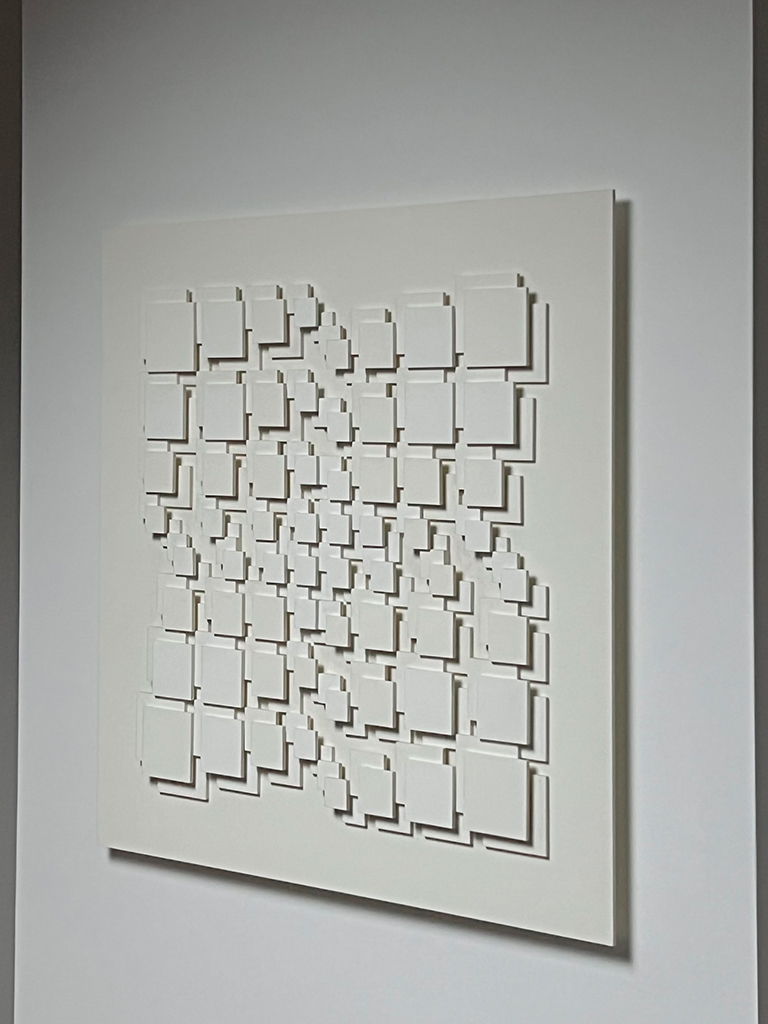
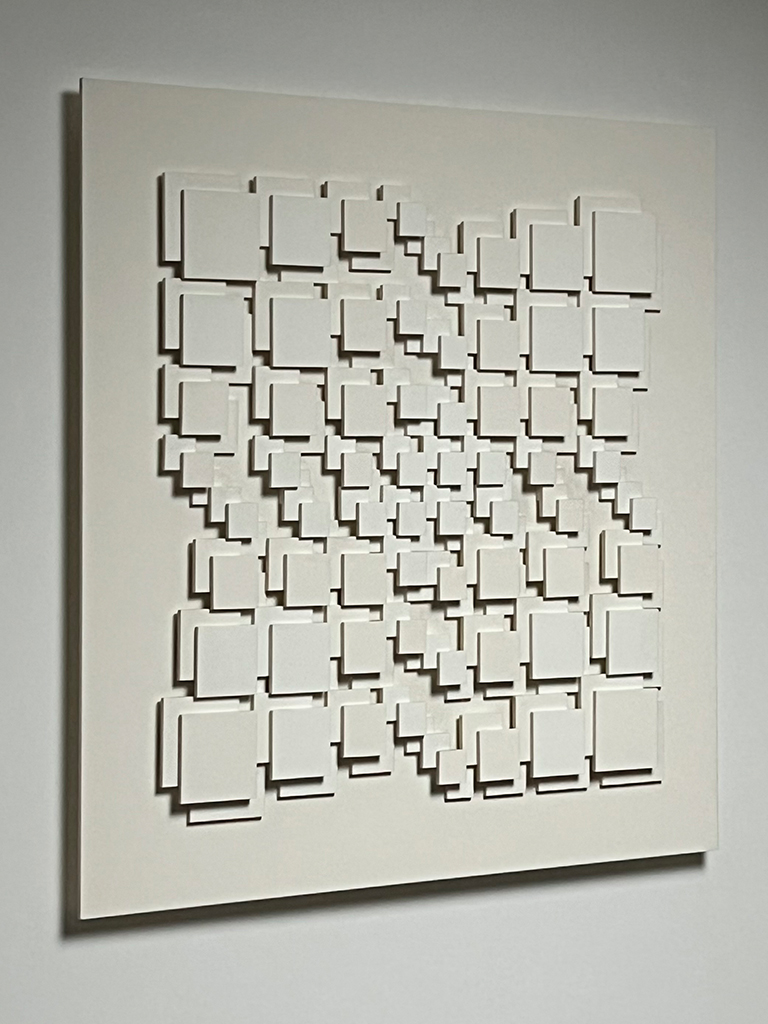
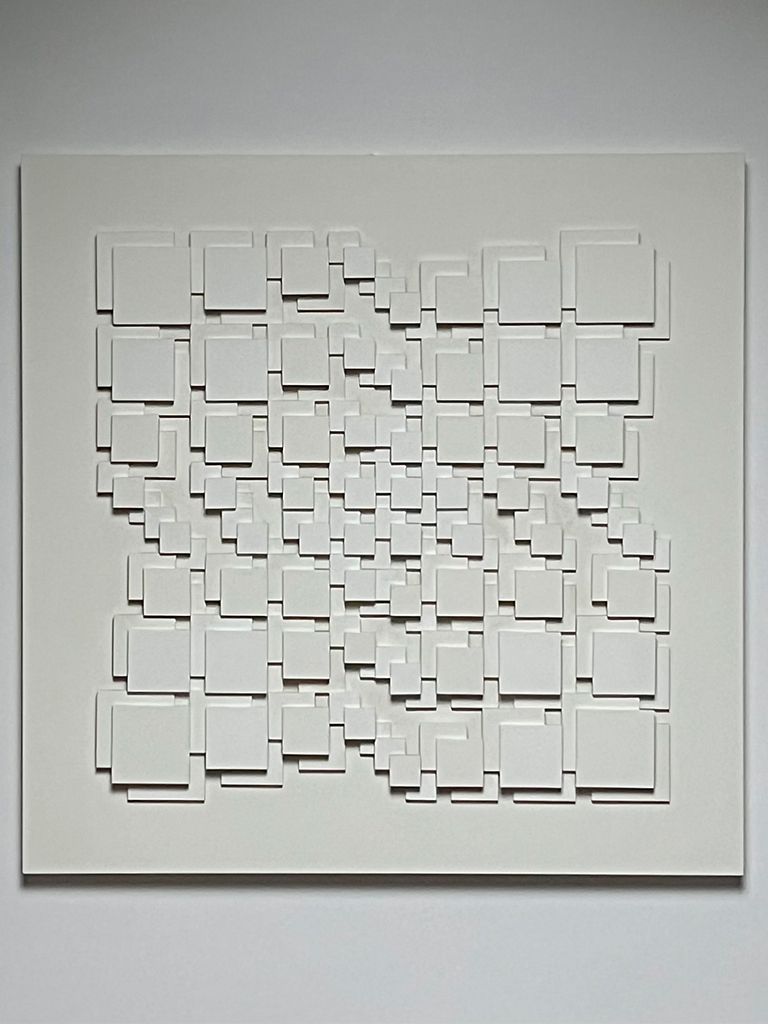
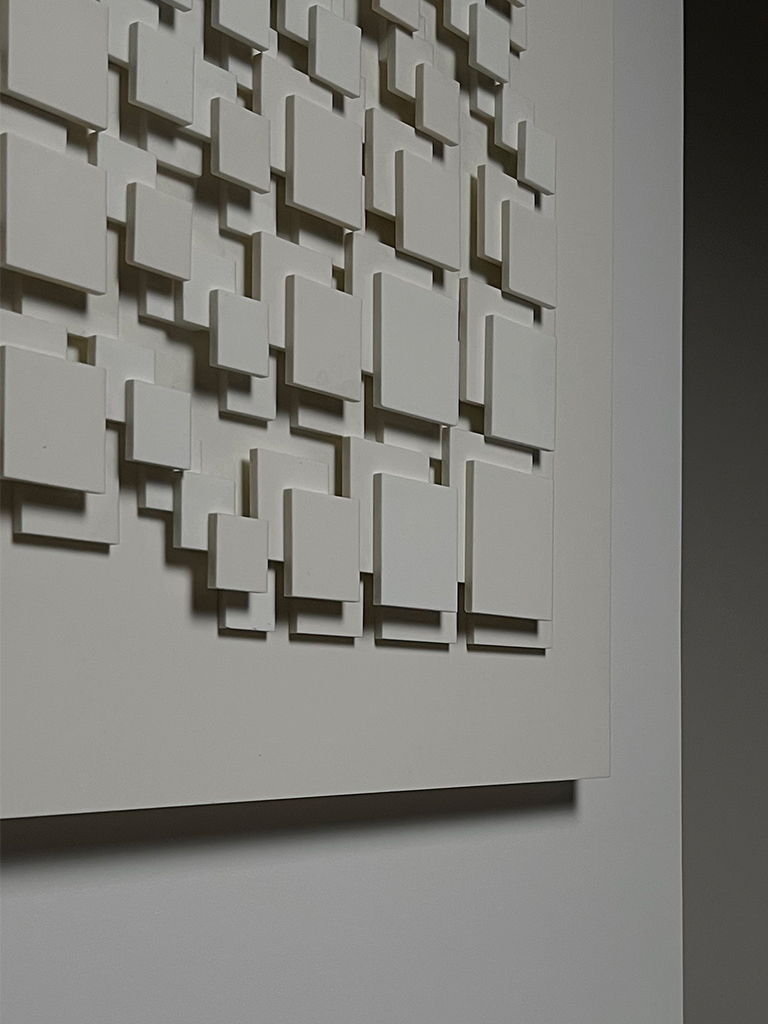
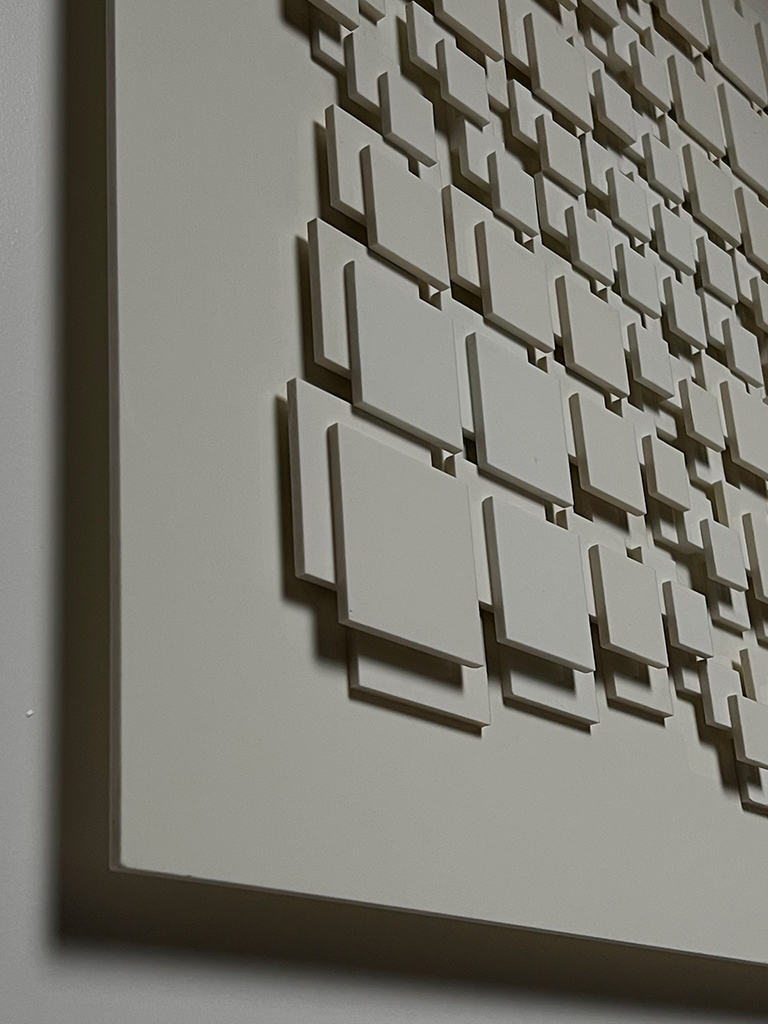
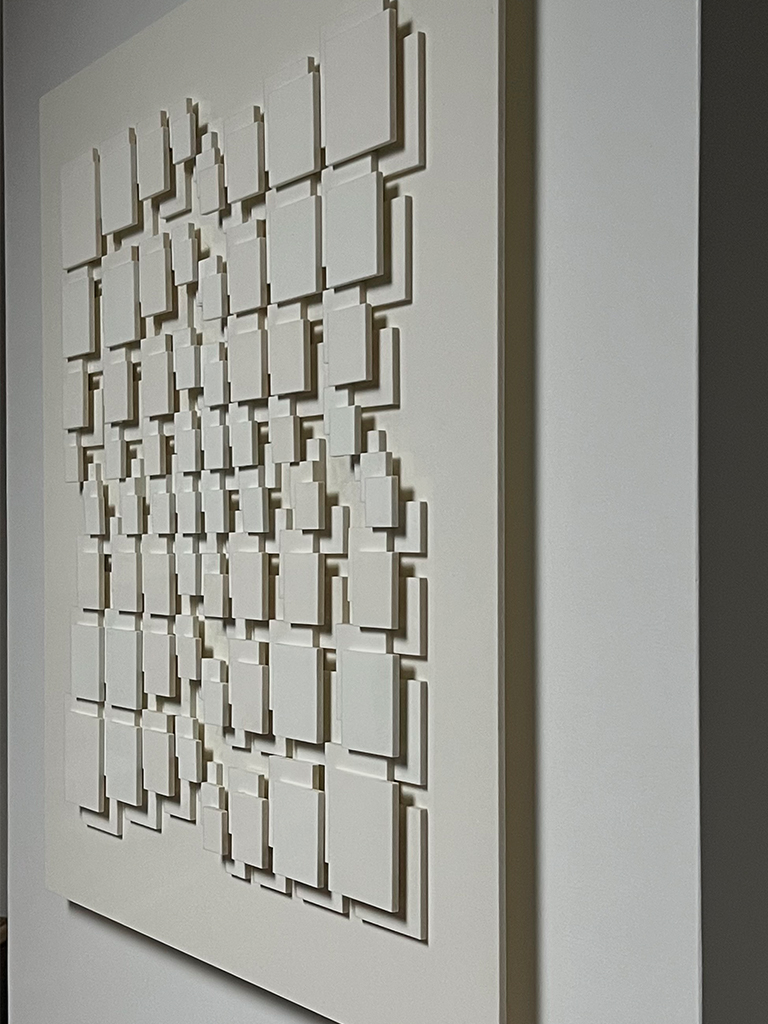
Created in 1972, Quadratreihungen is an acrylic relief by German artist Hans-Dieter Schrader (HD Schrader), representing a key moment in his exploration of geometric spatial structures. This piece foreshadows the development of his celebrated Cubecracks series, where his focus on the interplay of form, light, and perception would deepen. As a founding member of the International Workgroup for Constructive Art (IAFKG), Schrader was a vital figure in the promotion of Concrete Art and Constructivism, movements that prioritize mathematical precision and formal rigor.
The relief’s monochromatic design features a grid of raised square elements, creating dynamic shifts in optical perception through the interaction of light, shadow, and depth. The use of Plexiglas enhances the reflective qualities of the work, turning it into an immersive, spatial experience that changes depending on the viewer’s perspective. Schrader’s minimalist approach emphasizes clarity, with the precise arrangement of forms reflecting his commitment to the formal and intellectual aspects of art.
Hans-Dieter Schrader (born 1939, Germany) is a pivotal figure in the development of Concrete Art and Constructivism. As a founding member of the International Workgroup for Constructive Art (IAFKG), Schrader was instrumental in advancing the formal, intellectual aspects of geometric abstraction, which would become a hallmark of his artistic practice. His work explores the intersection of mathematics, visual perception, and the physical properties of materials, producing art that engages both the eye and the mind.
Throughout his career, Schrader’s art has been exhibited internationally, contributing significantly to the discourse surrounding modern abstract art. He has shared this trajectory with like-minded artists such as Hartmut Böhm, with whom he was featured in influential exhibitions dedicated to systematic-constructive art, and John Marmot, whose conceptual approach to form and structure offered a complementary counterpoint to Schrader’s rigor. These connections not only contextualize his practice within a broader movement but also highlight the dialogic nature of his engagement with contemporaries who similarly explored the boundaries of abstraction.
His works continue to influence contemporary artists who engage with themes of spatial relationships, materiality, and the intersection of mathematics and aesthetics.
Hans-Dieter Schrader (born 1939, Germany) is a pivotal figure in the development of Concrete Art and Constructivism. As a founding member of the International Workgroup for Constructive Art (IAFKG), Schrader was instrumental in advancing the formal, intellectual aspects of geometric abstraction, which would become a hallmark of his artistic practice. His work explores the intersection of mathematics, visual perception, and the physical properties of materials, producing art that engages both the eye and the mind.
Throughout his career, Schrader’s art has been exhibited internationally, contributing significantly to the discourse surrounding modern abstract art. He has shared this trajectory with like-minded artists such as Hartmut Böhm, with whom he was featured in influential exhibitions dedicated to systematic-constructive art, and John Marmot, whose conceptual approach to form and structure offered a complementary counterpoint to Schrader’s rigor. These connections not only contextualize his practice within a broader movement but also highlight the dialogic nature of his engagement with contemporaries who similarly explored the boundaries of abstraction.
Title: Quadratreihungen
Artist: Hans-Dieter Schrader (HD Schrader)
Year: 1972
Medium: Acrylic (Plexiglas) on Panel
Dimensions: 70cm x 70cm x 4cm
Style: Concrete Art, Geometric Abstraction, Minimalism
Artist: Hans-Dieter Schrader (HD Schrader)
Year: 1972
Medium: Acrylic (Plexiglas) on Panel
Dimensions: 70cm x 70cm x 4cm
Style: Concrete Art, Geometric Abstraction, Minimalism